
 0
 0
 0
 6 October 2026
Use case – fiber-optic network on the map
How Fiberway made network data available to everyone who needs it – not just GIS specialists
FFiberway is a local telecommunications operator that develops its own fiber-optic infrastructure and provides services to thousands of customers. With such an extensive network, infrastructure information is needed not only by technical teams. It must also be accessible to employees working in customer service, marketing, and directly in the field.
Challenge
Every day, Fiberway needs information that connects infrastructure data with details about the services it provides. Where does the network run? Which buildings does it reach? What equipment is located at a given site?
The data was available, but using it required the right tools and expertise. One of those tools was QGIS, which worked well for specialists, but for non-technical users it was not a solution they could access quickly and intuitively.
In practice, this meant that access to some network information remained limited to a small group of employees. Instead of checking the data themselves, people from other departments had to turn to the technical team for assistance. Another challenge was fieldwork. Technicians need information about a specific asset at the exact moment they are working on site. Documentation available only on an office computer does not solve this problem.
In practice, this meant that access to some network information remained limited to a small group of employees. Instead of checking the data themselves, people from other departments had to turn to the technical team for assistance. Another challenge was fieldwork. Technicians need information about a specific asset at the exact moment they are working on site. Documentation available only on an office computer does not solve this problem.
Solution
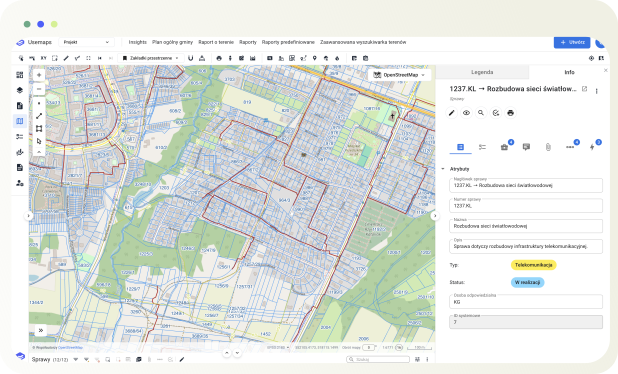
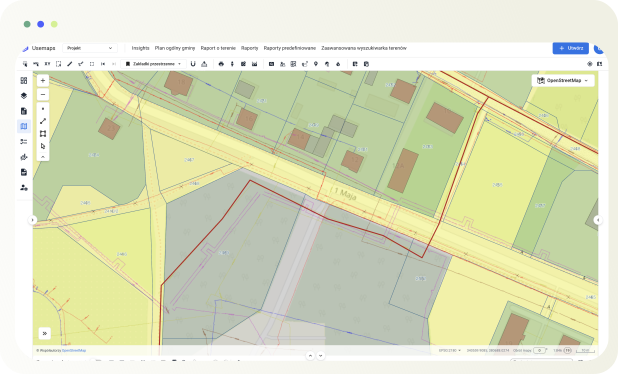
Fiberway implemented Usemaps as a shared environment for working with infrastructure data. In one place, network information can be linked with data related to specific address points.
A key factor was making the system accessible to people who do not work with GIS tools on a daily basis. Easier access to information allowed employees to check the data they need for their everyday work independently, without involving the technical team each time.
Employees working in the field can access the network map and documentation linked to a specific asset directly on site using a tablet. This means that information is available exactly where it is needed, rather than only after returning to the office.
The solution was deployed on Fiberway’s own infrastructure. For a telecommunications operator working with detailed data about its network and customers, maintaining control over this information is crucial from both an organizational and security perspective. Network and customer data remain within the organization, which in this type of business is a requirement rather than a preference.
Results
Network data was no longer accessible only to employees with specialist knowledge and dedicated tools. It became more widely available across the organization, while access to information remained tailored to the needs and permissions of individual users.
For office-based teams, this means faster access to information about infrastructure and services. For field employees, it means being able to check the necessary data directly at the asset location.
As a result, Fiberway gained not only a tool for managing and presenting infrastructure, but also a shared working environment used by employees across the organization.
