 1
1 0
0 0
0 11 February 2026
Single Symbolization
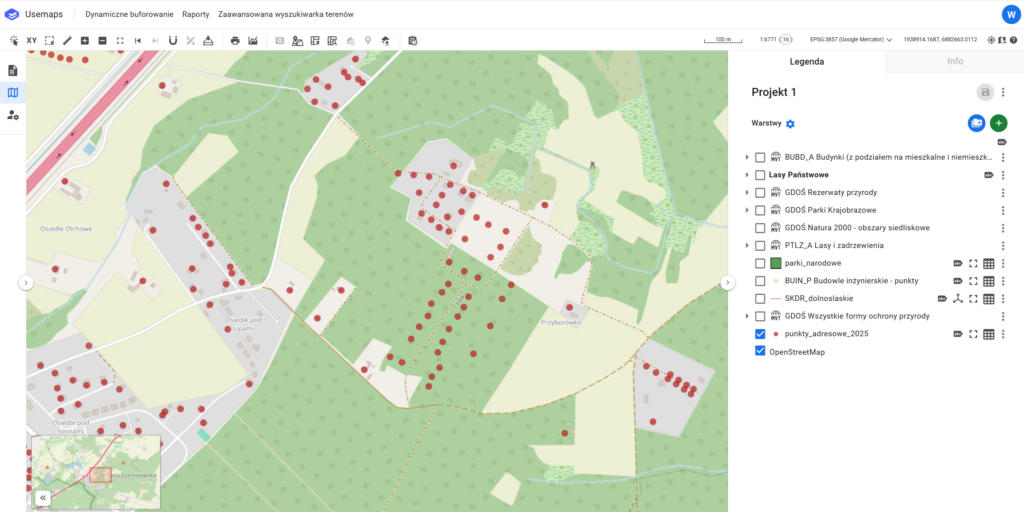
Single symbolization displays all objects in the same way. For example, all address points are shown as red dots with a size of 6.
Unique Symbolization
Unique Symbolization assigns the style of individual objects in a layer based on a specific attribute value.
Example:
We have power lines that have a text (dictionary) attribute: overhead or underground.
Using unique symbolization, we can display:
- all underground lines as solid lines
- all overhead lines as dashed lines
Graduated Symbolization
Graduated symbolization assigns the style of each object in a layer based on the value of a numeric attribute.
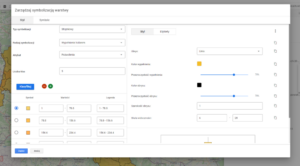
Using graduated symbolization, it is possible to define the number of classes and the ranges of attribute values that assign an object to a specific class. A separate style can be applied to each class.
Example:
We have a vector layer with municipalities, and in the attribute “population,” we have the number of people living in each municipality.
We want to display it as follows:
- Municipalities with a population above 500,000 – in red
- Municipalities with a population from 50,000 to 500,000 – in yellow
- Municipalities with a population from 1 to 50,000 – in green
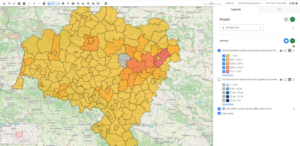
Here is an example of graduated symbolization – building permits for apartments by counties.